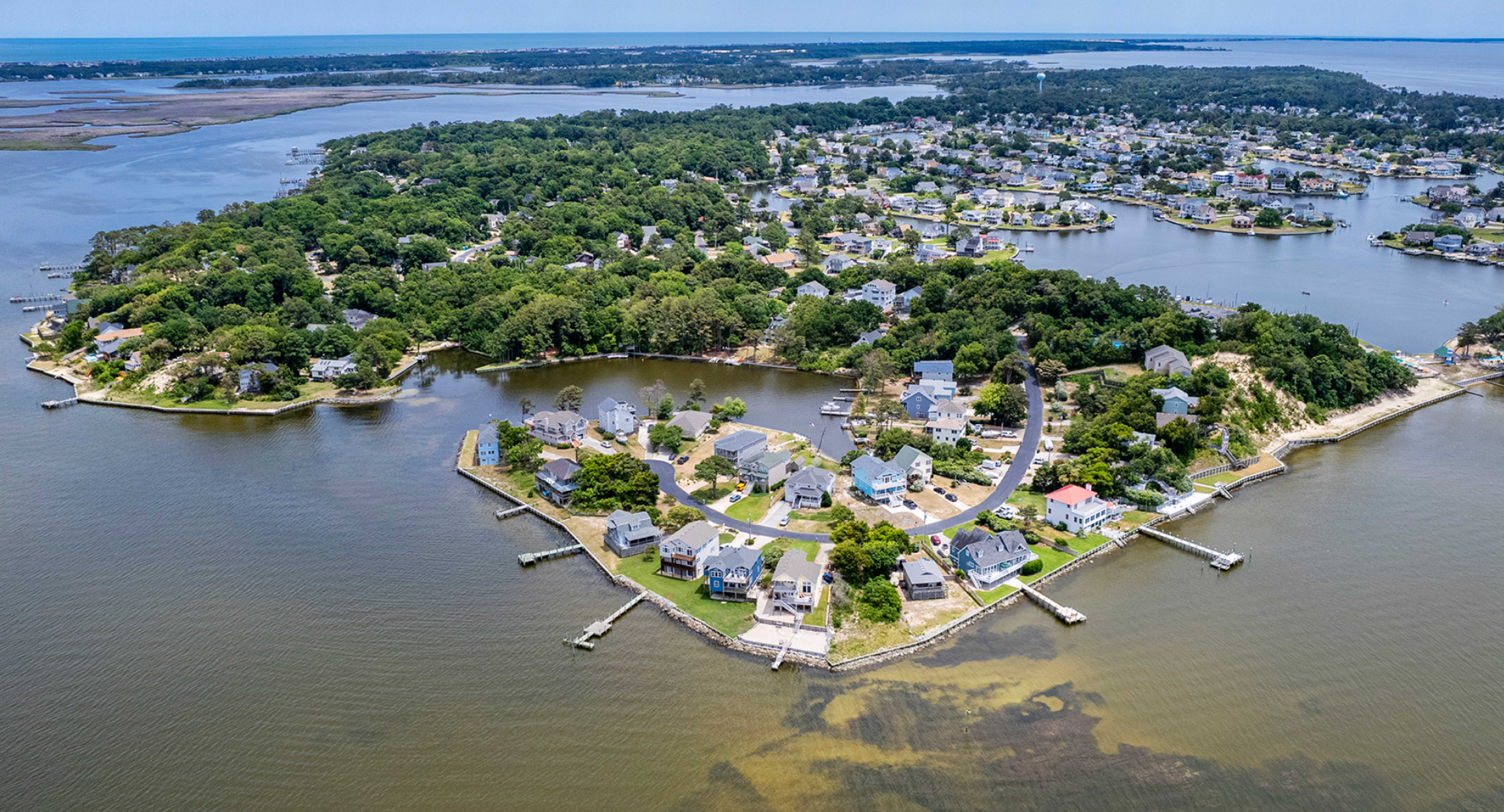
Tucked away on Colington Island just west of Kill Devil Hills, Colington Harbour offers a distinctly different setting from the beachfront communities nearby. Colington itself spans Little and Big Colington Island, with Big Colington bordered by the Albemarle Sound, while Colington Harbour adds canal-front homes, established residential streets, mature vegetation, and extensive access to the water. It is also part of one of Dare County's significant year-round residential areas. First Light Pest Control provides pest control in Colington Harbour, NC, with a local understanding of the moisture, vegetation, waterways, crawl spaces, and structural conditions that influence pest activity on the island.

Canal-front and wooded properties require careful inspection because pest pressure often begins outside the living space. First Light looks for moisture conditions, exterior harborage, vegetation near the structure, gaps around utilities and vents, crawl-space vulnerabilities, and other routes insects or rodents may use to enter a home. Depending on what we find, service can include household pest treatments, mosquito management, termite protection, rodent control and exclusion, or wildlife exclusion. Our approach emphasizes correcting accessible contributing conditions in addition to treating active pests. For Colington Harbour homeowners, that means a pest-management strategy designed around the individual property rather than a generic treatment applied simply because a home happens to be on the Outer Banks.



Colington Harbour's canals, surrounding sound waters, marsh habitat, mature vegetation, and humid summers create excellent conditions for mosquitoes and a variety of other insects. Ants, cockroaches, and spiders can take advantage of moisture and protected areas around homes, while crawl spaces and persistently damp locations deserve particular attention for termite activity. Wooded areas can also place rodents and nuisance wildlife close to residences, where small openings around foundations, vents, soffits, or rooflines may provide access indoors. Recognizing these local conditions allows First Light to focus treatment and exclusion where pests are most likely to originate and help prevent small exterior problems from becoming larger indoor ones.